
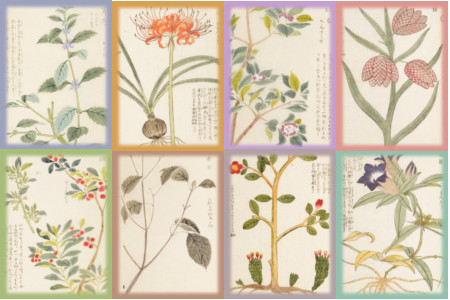
In the Shennong Bencao Jing, the foundational ancient Chinese materia medica, three herbs are credited with the profound function of “removing the old to bring about the new” (推陳致新).
While the logic behind this function is seemingly simple, its implications, both physiological and emotional, are often overlooked.

When there is accumulation or obstruction, movement cannot be properly restored and nourishment is impeded. We must first clear what blocks the way. These accumulations can be physical, linked to digestive difficulties, inflammations and in extreme cases tumors. They can also be emotional, linked to behavioral patterns that don’t serve us anymore or unresolved experiences that disrupt mental healing.
The three herbs are chai hu, da huang and mang xiao.
Chai Hu: Removing Stagnant Qi to Release the Pivot
Chai hu resolves obstructions of qi that interfere with the shao yang conformation’s pivot capacity to regulate between interior and exterior, both physically and emotionally. In the Shanghan Lun it is the chief herb in the Xiao Chai Hu Tang family of formulas, treating disruptions in this dynamic axis – whether from internal suppression or external invasion.
For more on this, see the pieces on chai hu and xiao chai hu tang, where I explore their indications and mechanisms in depth.
Da Huang and Mang Xiao: Clearing Heat, Moving Obstruction
Da huang and mang xiao are well known for their purgative effects. They are potent herbs for draining excess heat through the bowels. While constipation is one possible sign of such heat, it is not the primary indicator. More important are symptoms of abdominal fullness and pain, aversion to pressure, tidal fever, sensations of heat, and a general sense of internal build-up.
Together, these herbs appear in several formulas in the Shanghan Lun designed to treat serious, often acute, accumulations of heat and matter:
- Da Cheng Qi Tang for acute inflammatory heat and dryness build-up in the intestine. Here, constipation is a required diagnostic feature.
- Da Xian Xiong Tang and Da Xian Xiong Wan for acute inflammatory heat and fluid build-up in the chest area. This is a severe and potentially life-threatening condition that may present with muscular rigidity and spasms.
- Tao He Cheng Qi Tang for heat and blood stasis in the lower abdomen.
The combination of these two herbs is used to rapidly flush the excess heat from the body through the bowels.
In modern biomedical terms, such acute heat accumulation might correspond to bacterial infections or even sepsis, often treated with antibiotics. The Shanghan Lun also expresses the life-threatening danger of these conditions, and I am grateful for the undeniable life-saving power of modern antibiotics. However, I also believe that the ancient logic of flushing out inflammatory heat through intestinal function remains relevant.
This strategy for removing heat and toxins through the bowels to restore proper bodily function, highlights the importance of supporting gut bacteria following the use of antibiotics, using both probiotics and prebiotics. In clinical practice, I also consider supporting the recovery process of this important intestinal function by integrating da huang or mang xiao into the formula selected based on the individual’s constitution and condition.
A perfect example from the Shanghan Lun itself is the formula Chai Hu Jia Mang Xiao Tang, where mang xiao is added to Xiao Chai Hu Tang to target lingering heat in the chest. This demonstrates a sophisticated understanding of how residual pathogenic factors can linger after resolution of the primary illness, and how gently guiding the heat to purge may facilitate true healing.
The Versatility of Da Huang
Da huang appears in 15 formulas of the Shanghan Lun in three different roles:
- Clearing Inflammatory Heat:
Used in cases of acute excess heat, as detailed above, especially when symptoms suggest internal clumping and stagnation. - Relieving Constipation:
This is perhaps the most literal application of “removing the old”. Because da huang is bitter and cold, it excels at treating constipation caused by heat or damp-heat; but its purgative action is so effective that it is sometimes used even when cold or yin deficiency underlie the accumulation, always with caution and appropriate herbs for addressing the cause. - Invigorating Blood
Da huang is an important herb for moving blood, particularly where excess heat has led to blood stasis in the abdomen. This includes digestive disorders, liver pathologies manifesting in hepatitis, and also gynecological conditions. Symptoms indicating the use of da huang include abdominal fullness, tension and pain, together with heat sensations.
One of the fascinating expressions of da huang pathologies in the Shanghan Lun is emotional instability, even described as manic behavior, particularly associated with blood stasis and heat in the lower abdomen.

From the perspective of “removing the old to bring about the new,” da huang may support the body in releasing unresolved emotional trauma. By draining pathological build-up of heat and blood, it sets the stage for renewal of qi and blood enhancing psychological healing.
For more on this, see my piece on Tao He Cheng Qi Tang, where I explore this principle in depth.
Conclusion
Da huang and mang xiao are much more than simple laxatives. They are agents of transformation – helping the body discard the old, the stagnant and the obstructive so that renewal can take place. Whether dealing with physical heat, emotional burden, or post-illness recovery, their proper use reminds us that healing often begins with letting go.
Leave a Reply